The Mentorship Gap: Why India’s ₹9,886 Crore Skilling Push Isn’t Enough
Here is my take on union Budget 2026-27, and something doesn’t add up.
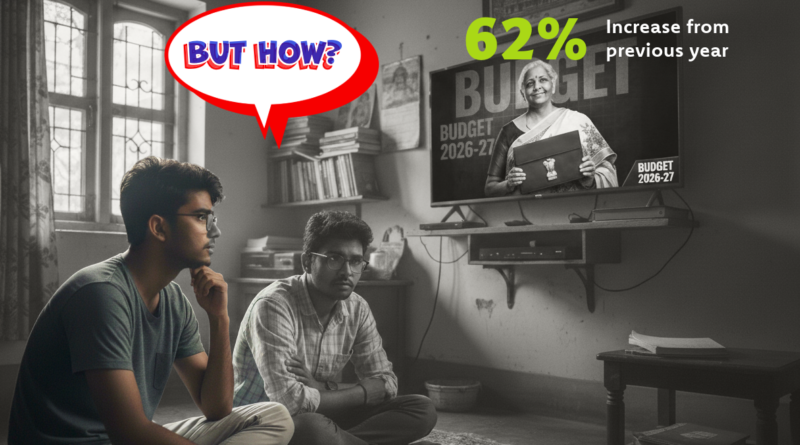
The numbers look impressive. A 62% jump in skilling allocations—nearly ₹9,886 crore. Plans to train 2 million AVGC professionals by 2030. 1 lakh allied health workers within a year. Content Creator Labs in 15,000 schools. The government is clearly betting big on youth-driven economic transformation.
But here’s the problem: allocation doesn’t equal outcome.
The Utilization Problem
What I’m seeing here is classic: supply-side infrastructure without demand-side activation.
The budget creates new verticals—AVGC, allied health, caregiving, veterinary para-professionals, AI-enabled service roles. These aren’t traditional paths. They’re emerging ecosystems with unclear entry points and no established playbooks.
Picture a 20-year-old in Indore or Kochi. They’ve heard about “digital economy” and “new opportunities.” But do they know what an AVGC career actually looks like? How to build skills for sports science roles? Whether allied health has real growth in their region? What “10% global services share by 2047” means for them specifically?
Most don’t. And that information gap is expensive.
Where Policy Meets Reality
You can build 500 college labs for content creation, but if students don’t know how to leverage them, what skills employers value, or how to build portfolios—those labs sit underutilized.
The same with skilling schemes. Funding exists. Seats are available. But conversion from “seat availability” to “meaningful skill development” to “actual employment” depends on factors the budget doesn’t address: awareness, guidance, network access.
Students in Tier-II and Tier-III cities are making career decisions with incomplete information, outdated family advice, and zero exposure to people working in these new sectors. The government’s High-Powered Standing Committee operates at the policy level. What’s missing is what happens on the ground.
The Structural Gap
This is why I’m building Bodhira—a mentorship platform targeting Indian youth.
Mentorship, when structured correctly, is the last-mile execution layer that converts macro allocations into micro outcomes. Right now, that layer barely exists.
The gaps are clear:
Discovery: New sectors emerge faster than awareness spreads. Students need to know these opportunities exist.
Decision Support: Career decisions are complex. AI is restructuring roles. Students need frameworks and context from people who’ve navigated similar paths.
Network Access: The budget talks about turning youth into “job creators.” But entrepreneurship needs more than capital—it needs networks, feedback, and pattern recognition from people who’ve done it.
Execution: Even if students find the right program, how do they navigate it? Build relevant work? Position themselves for roles that didn’t exist five years ago?
What I’m Building
The government is investing ₹10,000 crore in skilling. But investments need multipliers to generate returns.
That multiplier is structured, sector-specific mentorship at scale. Not generic advice or motivational talks—systematic connections between students and professionals who’ve navigated these emerging sectors.
Bodhira is designed to be that connective tissue. The infrastructure is being built. Capital is being allocated. But nobody’s systematically solving the navigation problem for the individual in Varanasi or Vijayawada trying to figure out their next move.
The market opportunity is real—B2C subscriptions, B2B partnerships with institutions, B2G collaborations for last-mile delivery, revenue-share with placement providers. But the core remains: there’s a fundamental gap between policy promises and individual access.
Why Now
India is positioning youth as drivers of transformation—”Yuva Shakti-driven” growth. That’s a shift from poverty alleviation to aspiration and capacity building.
But aspiration without navigation is noise. Capacity without deployment is wasted potential.
The next few years will determine whether this investment generates real capability and economic participation, or becomes another underutilized program with low conversion rates.
I’m building Bodhira because the difference between those outcomes is whether we solve the mentorship problem—systematically, at scale, with proper accountability.
If you’ve worked in skilling, education, or workforce development, I’d value the conversation. Still refining the model and testing assumptions.